A Coast Salish Story
February 2026
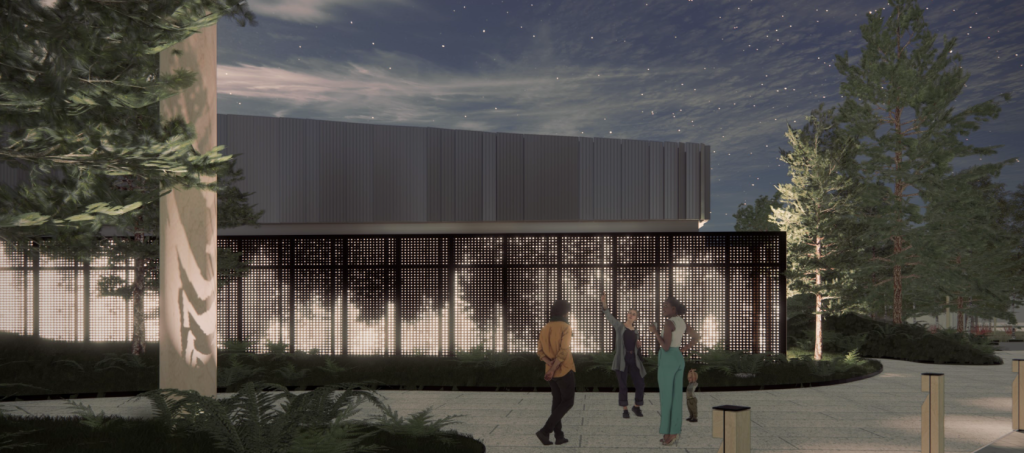
As part of the public art program for the PARC Campus, it was envisioned that a large mural commissioned from local Indigenous artists would be mounted on the exterior of the building. The design-build team embraced this requirement and created an architectural feature where the mural is integrated into the façade of the building. The image below shows the proposed concept, including the effect of back lighting for night views.
In keeping with ləkʷ^ əŋən Nation-to-Nation protocol, the Marston family of master artists was invited by Kosapsum and Songhees Nation leadership to share the rich art traditions of the Coast Salish peoples. Kwatleematt (Jane Marston) and Satuts Stsuhwum (Angela Marston) of Stz’uminus (Chemainus) First Nation were asked to create the imagery for the mural.
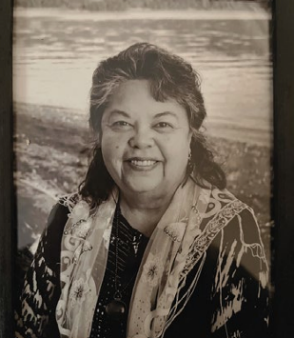
Jane is a celebrated Coast Salish First Nation artist who works in a variety of mediums, most celebrated for her carving. Her main inspiration comes from traditional Salish art and nature.

Angela is the daughter of Jane and David Marston, both talented carvers. They taught Angela traditional Coast Salish designs and carving skills from an early age. Angela also works in a variety of mediums.
The mural that Jane and Angela created tells a story of the Coast Salish peoples. Below are the images created by the mother-daughter team – from initial concept to final submission.
Early drawing of the mural concept

Final version prepared for integration with the metal façade

Each symbol in the mural helps tell this Coast Salish story. It is Jane’s belief that traditional symbols are extremely important and necessary, but that we must dream new dreams and invent new art that speak to us in our present day.
Camas Flowers are a reminder of the once thriving economic system that existed pre colonization. A prominent food source, the camas bulb was farmed and traded.
Woman Welcoming Guests symbolizes a traditional welcoming of visitors. We raise our hands to visitors as a sign of welcome, respect and thanks.
Coast Salish Baskets of Camas Bulbs signal the vital cultural and economic resource that camas played for the ləkʷ^əŋən people. Camas bulbs were at the centre of entrepreneurship and upheld a vibrant local economic system for hundreds of years.
Cedar Root Baskets were and still are used for storage of food and personal ceremonial belongings.
Wild Cherry Bark is collected in the spring and used in imbrication to create designs on baskets.
Butterflies symbolize new life and rebirth.
A Canoe of Visitors reflects the Indigenous protocol followed. When visitors are approaching from the waters in a canoe, they raise their paddles to show they come in peace and mean no harm.
Wolf and Eagle images on the canoe both symbolize strength, determination and resiliency.
Paddle Designs are inspired by old designs and represent coming together.
The Octopus symbolizes strength, adaptability and the intelligence of the community. We look at our ability to overcome challenging situations with creativity. The octopus shows us how to be resilient and heal when we are faced with multiple barriers and reminds us that we have the ability to transform and come back stronger with more determination.
Moon of Our Ancestors represents the ancestors that came before us. We know they are guiding us, showing us the way and welcoming visitors to their land. The moon can also represent life and light in the dark; lighting the way so people can travel by night. A guiding symbol that has eternally existed, it provides time to reflect on one’s inner self. When deeply contemplating what one is thinking, and where one is going, there is space to make necessary changes. The moon guides the spirit world, which is more active during this time, drawing them to the full moon.
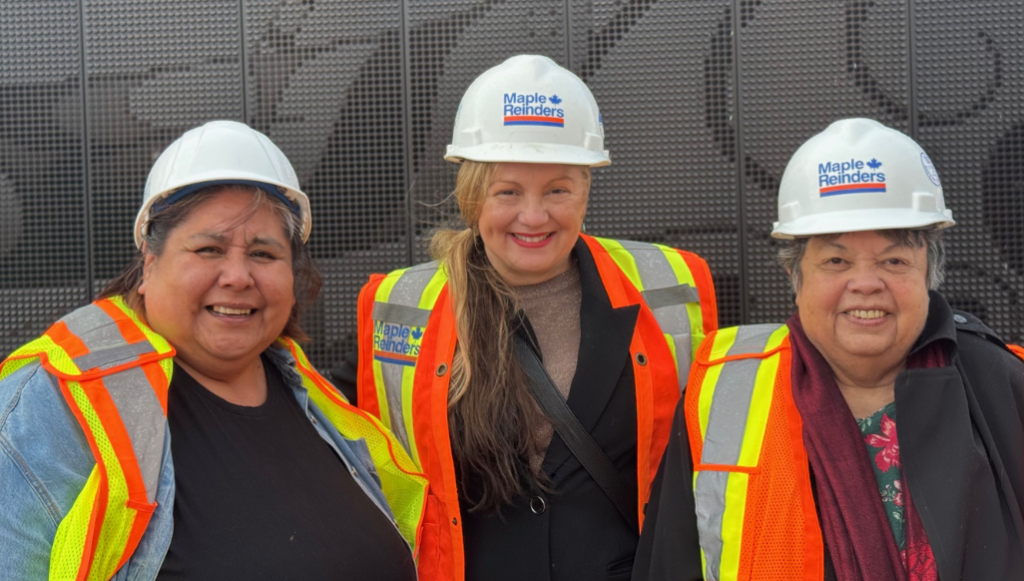
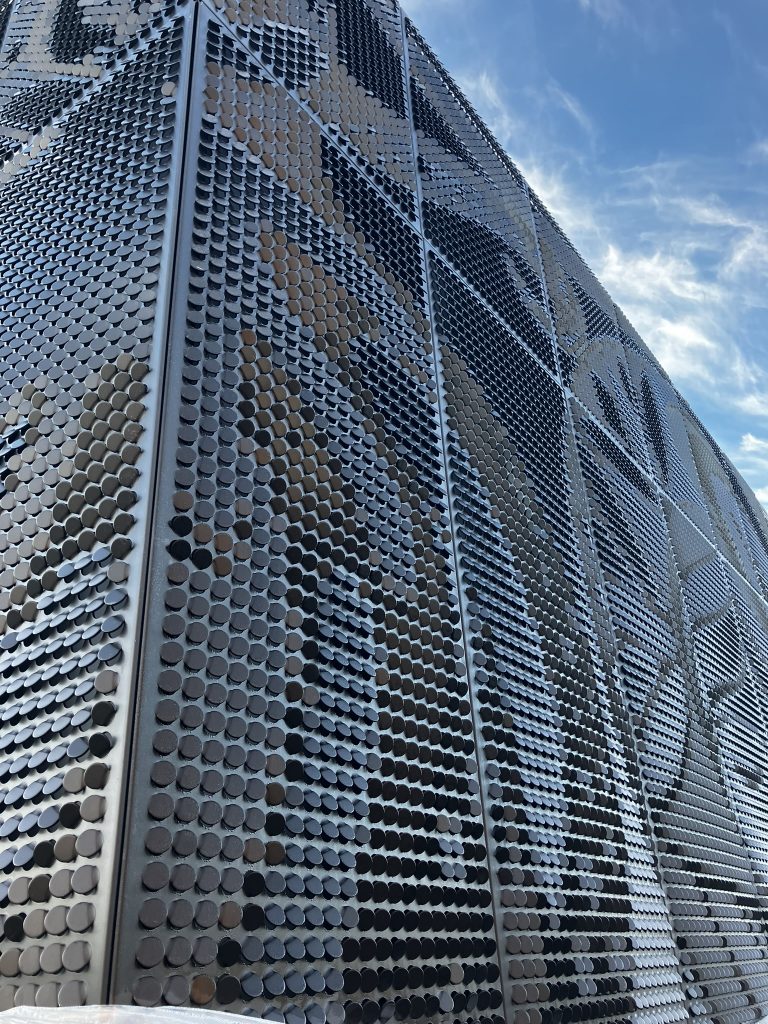
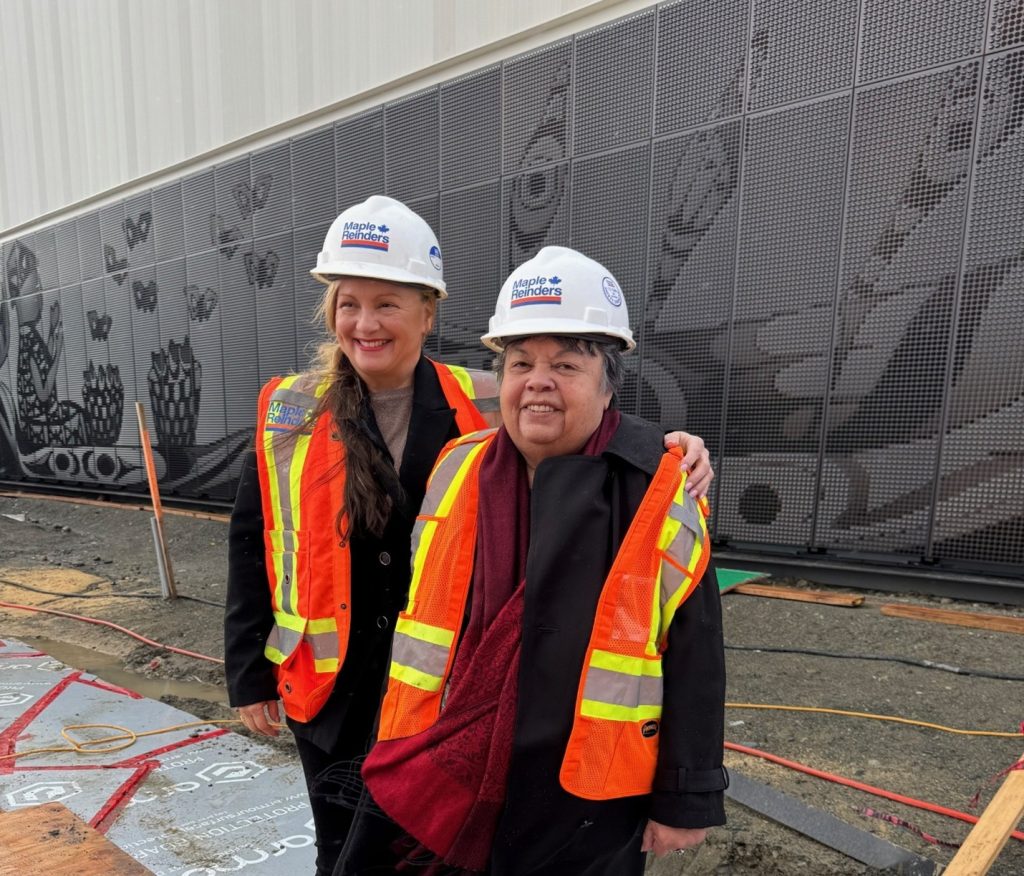
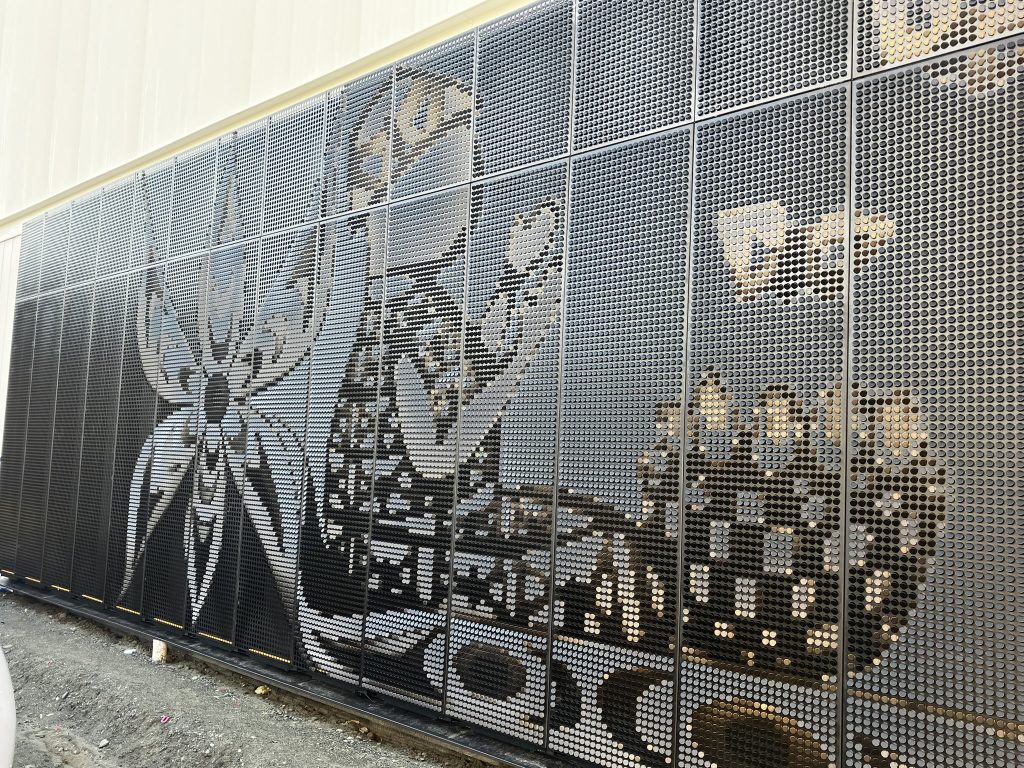
The design-build team of PARC Campus worked collaboratively with Jane and Angela to digitize and optimize their mural concept in order to prepare for manufacturing the façade with a system of bent perforations in the metal panels. This month the breathtaking 33m long by 4m high mural was installed on the north facing wall adjacent to the main entry of the building. Jane and Angela were on site to see the magnificent work of art come to life.
This month the breathtaking 33m long by 4m high mural was installed on the north facing wall adjacent to the main entry of the building. Jane and Angela were on site to see the magnificent work of art come to life.
More about the artists
Kwatleematt (Jane Marston) is a mother of seven grown children, and a proud grandmother and great grandmother. She is well known for her knowledge of Coast Salish religion and was also an instructor at the Women’s Studies Program at Vancouver Island University – Nanaimo.
Jane originally started carving under Simon Charlie in 1984, and she continued to work with him until April 2005. She used to make a variety of pieces including totem poles, ceremonial rattles, dolls, talking sticks, dancing sticks, paddles and ceremonial masks. One of her creations, a totem pole known as the Welcome Figure, is located behind the library at Kwulasulwut gardens on the campus of Vancouver Island University in Nanaimo. It acknowledges and thanks the Snuneymuxw people, on whose traditional land the campus sits.
Statu Stsuhwum (Angela Marston) is the daughter of Jane and David Marston, both talented carvers. They taught Angela traditional Coast Salish designs and carving skills from an early age. Angela also works in a variety of mediums
Angela holds a B.A. in Visual Arts and First Nations Studies and studied organizational and business psychology. She is the program director of the Indigenous Business Award program at BC Achievement and the executive director at the Four Salish Winds Arts and Education Society. She is currently working on delivering projects that support the education and skill development of Indigenous youth. A multi-talented and accomplished artist, Angela also designs and paints silk scarves. Her interest in fashion design led to the creation of a line of ties and scarves for the Vancouver International Airport staff. She has published several silkscreen prints and, interested in the use of Coast Salish traditional medicine, Angela collects plants to make soap and lotion for people with sensitive skin. To see the many and varied mediums in which Angela works, visit Angela Marston Art & Design – Angela Marston, Coast Salish Artist.